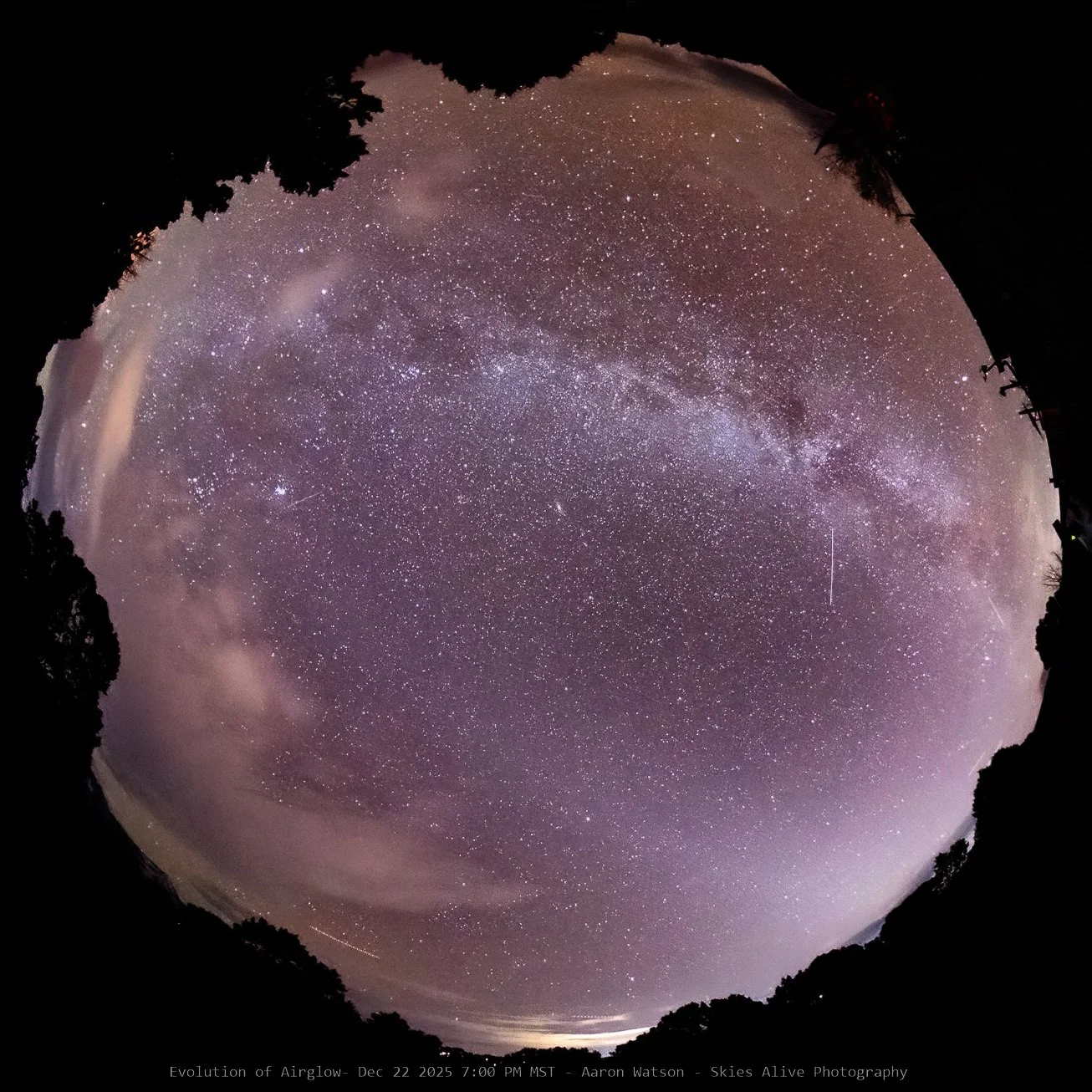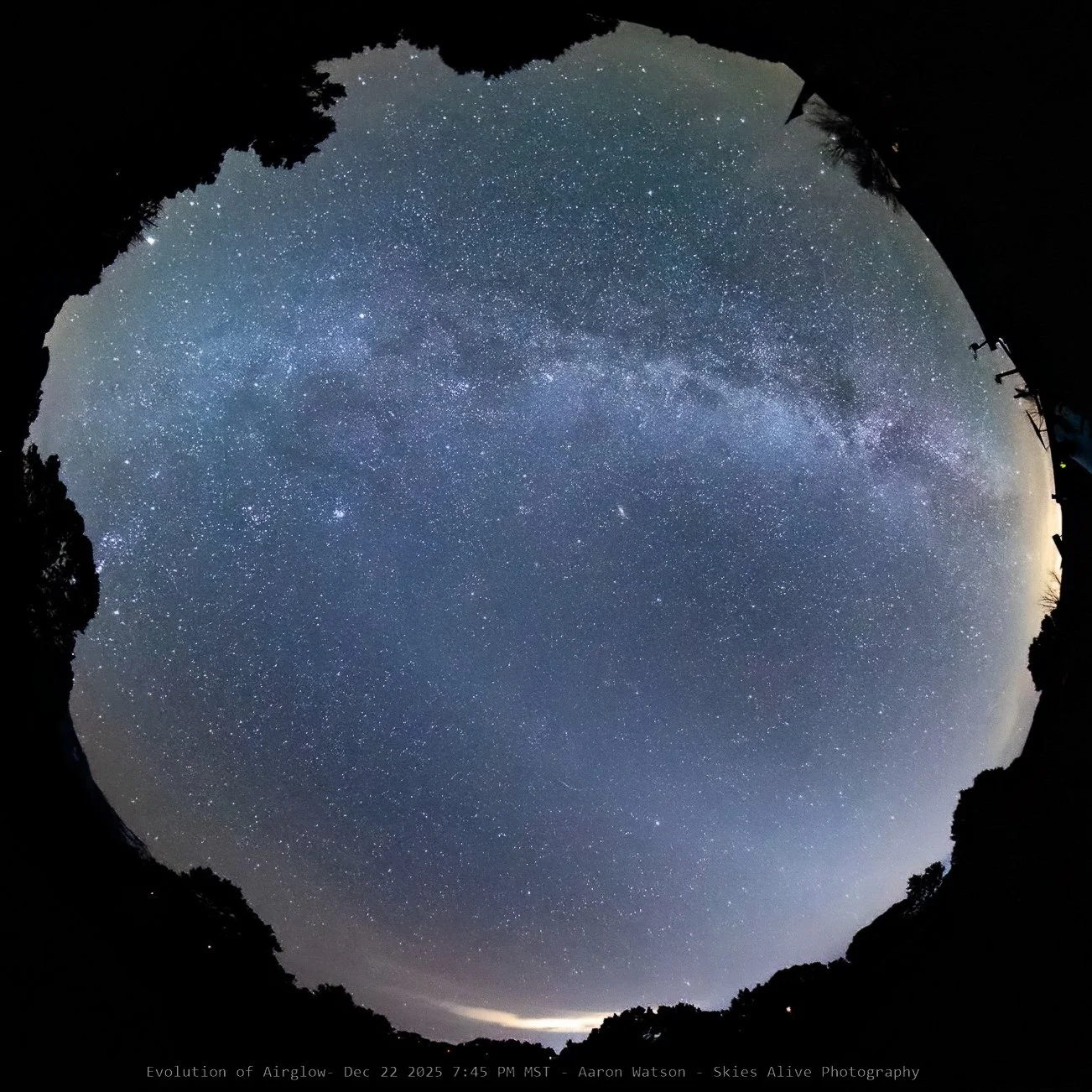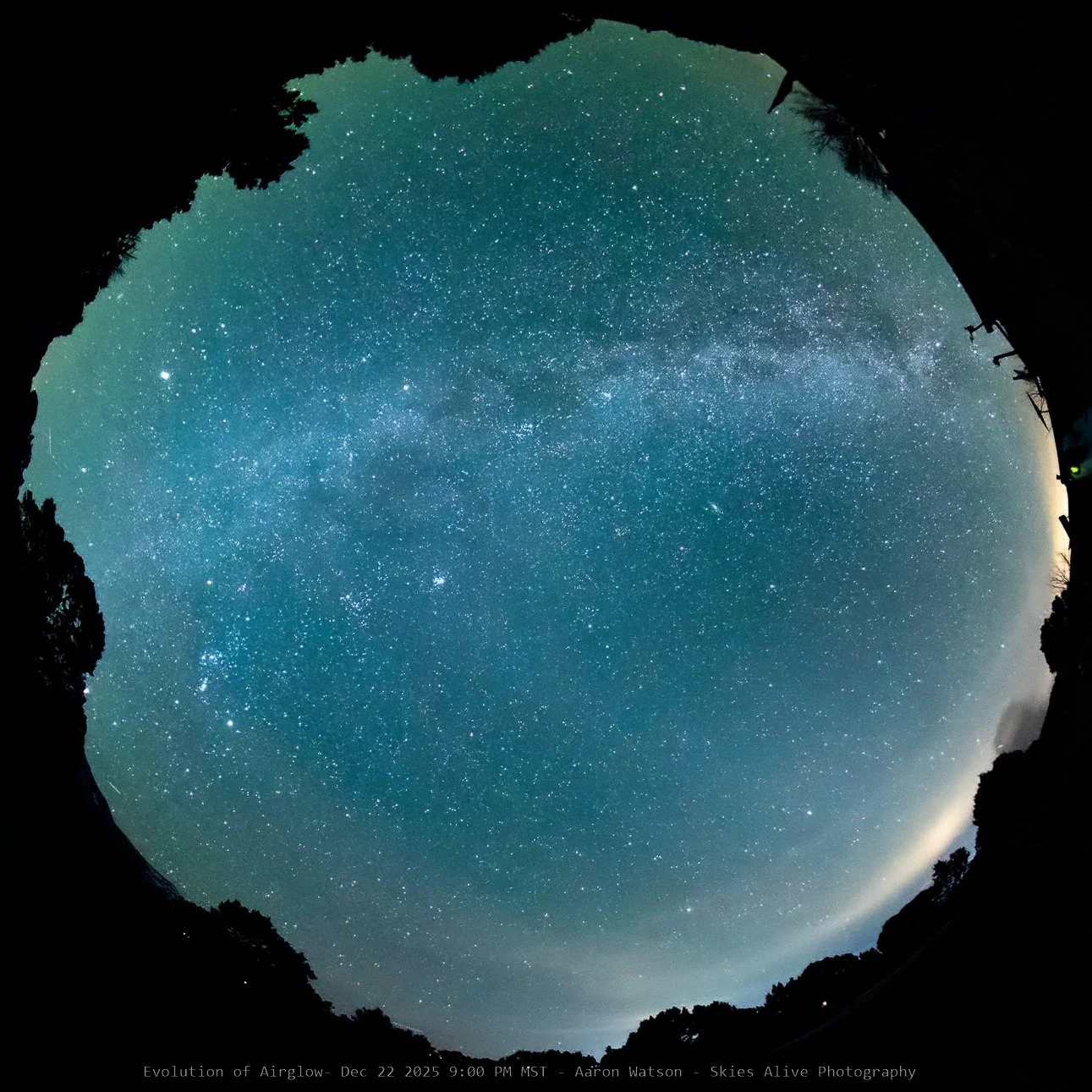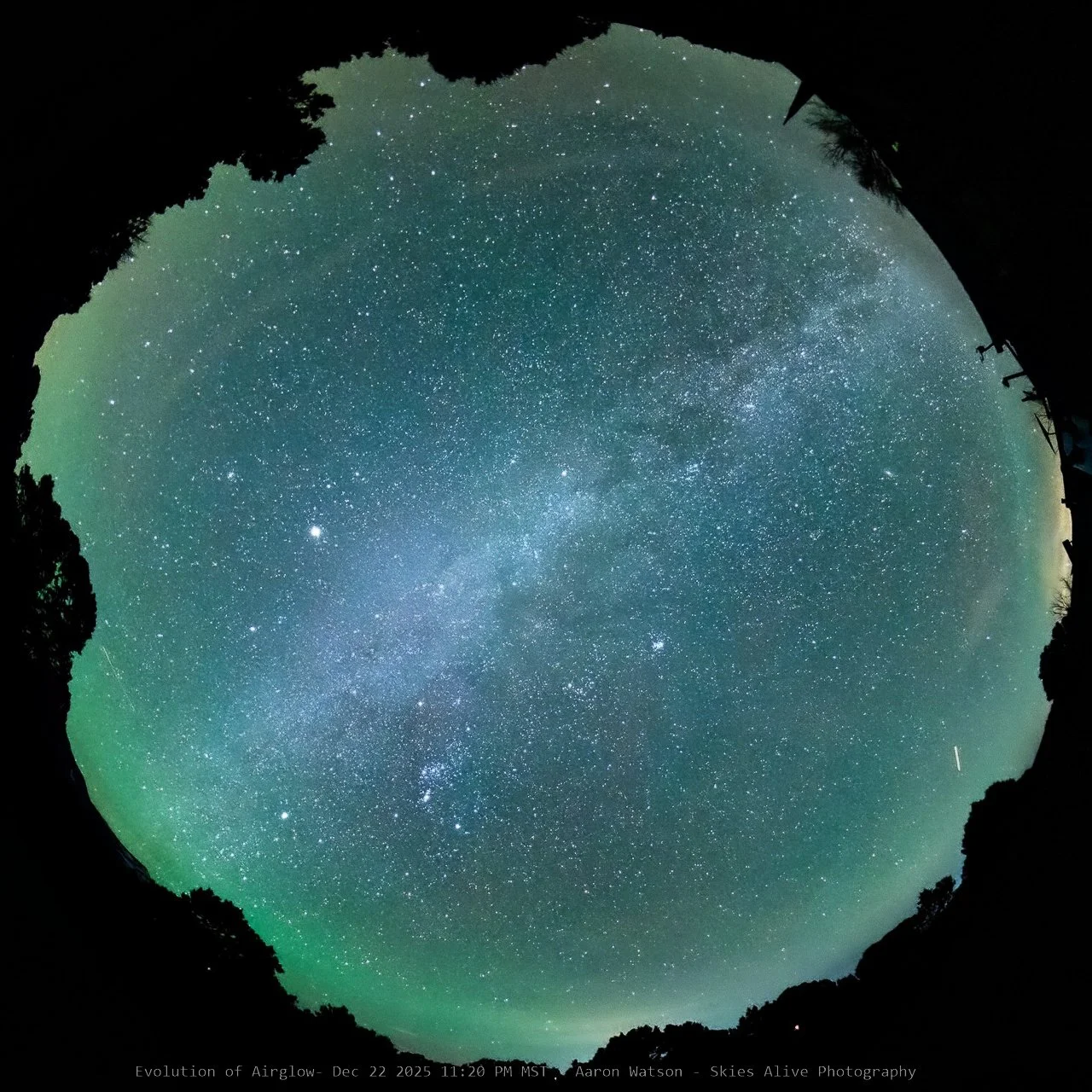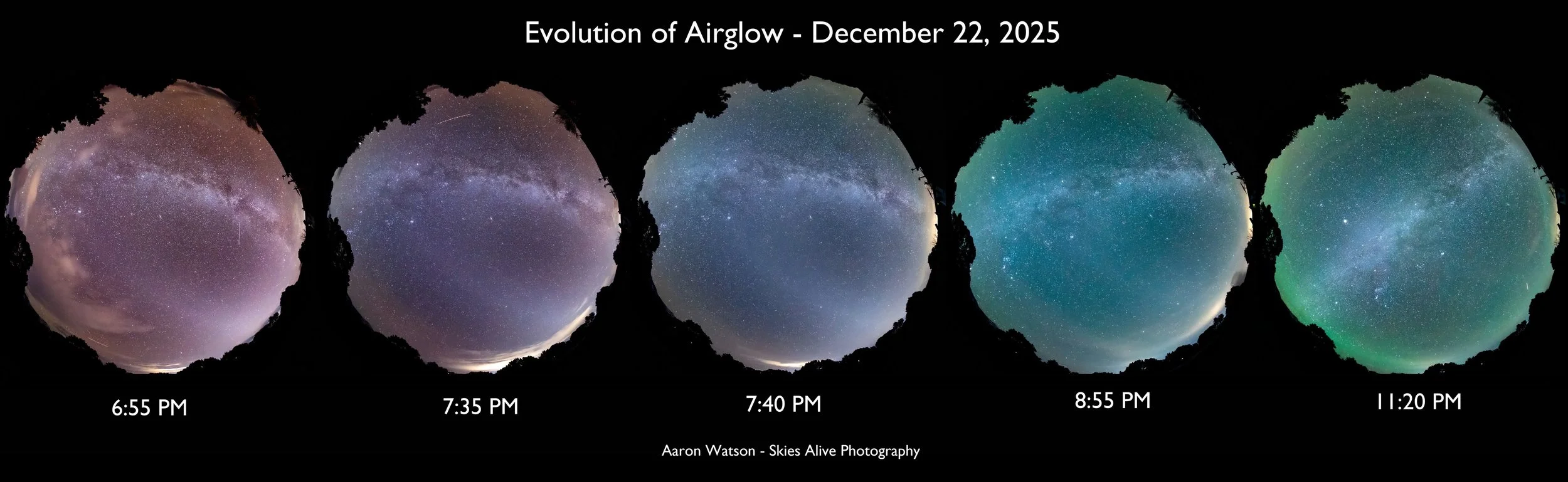
12/22/2025 Evolution of Airglow
A night of all sky images showing evolution of airglow over the course of an evening.
The night sky isn’t truly dark, as in jet black and inky. It might look dark, especially to artificial light-strained eyes, but there is a soft, celestial glow that becomes noticeable if you are dark adapted, and it can be recorded by upping the gain using long exposure photography.
On the night of December 22, 2025, the sky was wonderfully clear, and the temperature relatively warm for late December. I had the observatory set up in full - 12” dob for visual, 10” mounted astrograph for astrophotography, and the 8mm all sky lens taking it all in above. It was fun to play with my instruments out under the stars.
I also had my SQM-L meter, and took several reading throughout the night. It was noticeably bright on the readings (21.15 mpsas throughout the night vs 21.65 or darker on a good night), and this matched my observing experience, with many faint planetaries impacted and harder to see than other nights.
The sky was quite clear, but there was a noticeable and colorful airglow in the playback screen of the Nikon D750. Here is a sample of a few photos showing the change in sky color as it went from a bright reddish pink just after astronomical twilight, fading into a more neutral blue, and then transitioning to the familiar green glow with neon highlights appearing towards the southern horizon.