
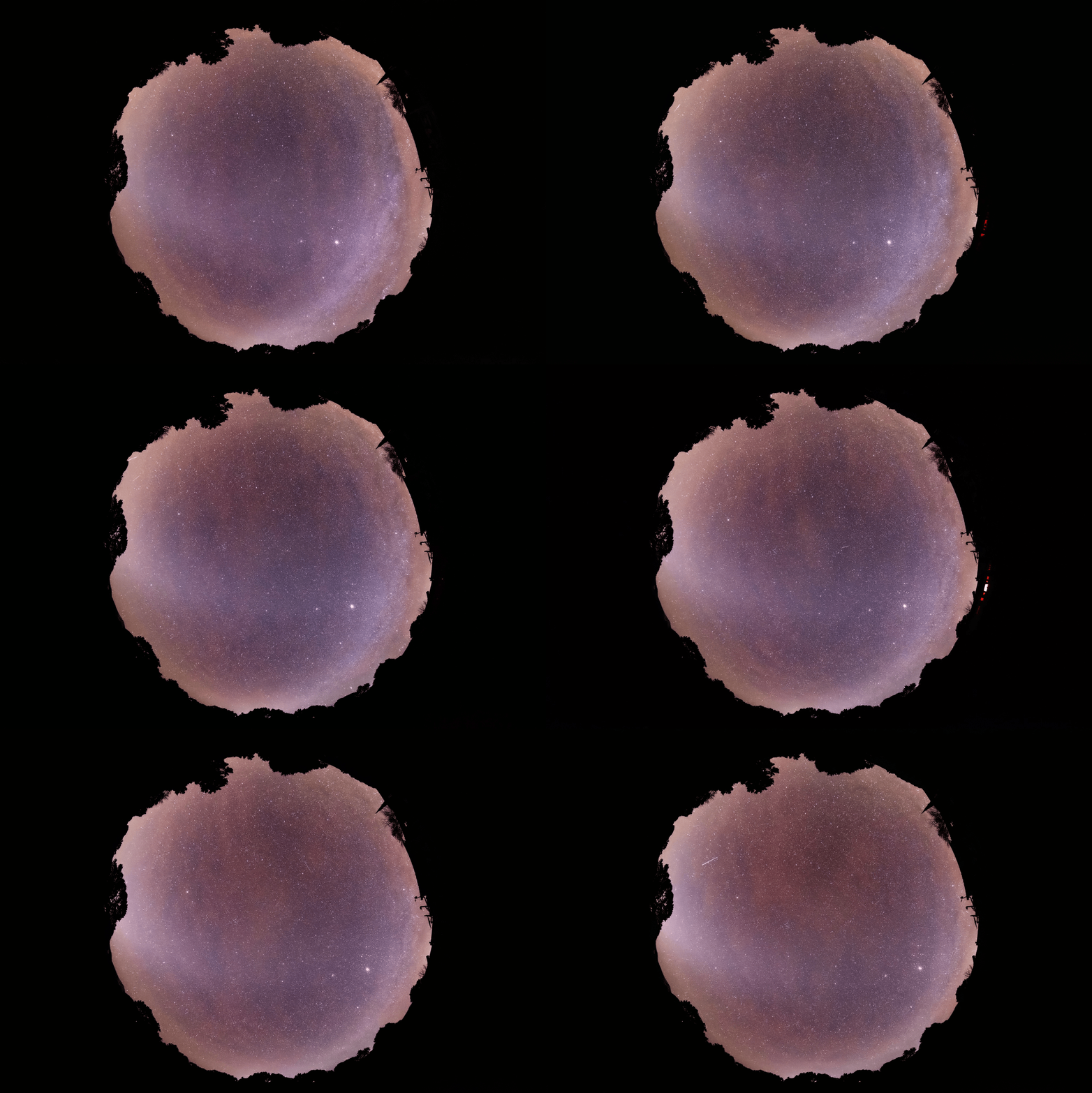
4:30 AM MST (11:30 UTC) DEC 30 2025
12/30/2025 vs 12/31/2025 Red All Sky Airglow vs. Dark Night
December 30th, 2025: Red All Sky Airglow
On the morning of the 30th, the sky was clear, but it looked a little diminished, like a thin film covering the stars. It looked like there was some faint glow around Jupiter but it could have been an illusion. I have seen this before, especially winter mornings. It is not great for telescope observing as it blocks the vibrancy of the view, and makes nebula harder to see. The permanent TESS-W SQM meter a couple miles away was showing a dismal 20.95 (21.41 mpsas on the local SQM-LU-DL). This was very low considering the clear, cloudless skies with no Milky Way in sight. I snapped some screenshots of the WV and GeoColor channels to demonstrate the dryness in the air column.
I set up an all sky lens on the Nikon D750 to see what was what. I instantly noticed a faint reddish glow on the screen, there it was - red airglow! So I set up a timelapse at 2 minute intervals and let it fly for about an hour.
This red airglow has been fairly bright and dominating recently and is diminishing the sky quality. There was strong red airglow last night on the 29th as well.
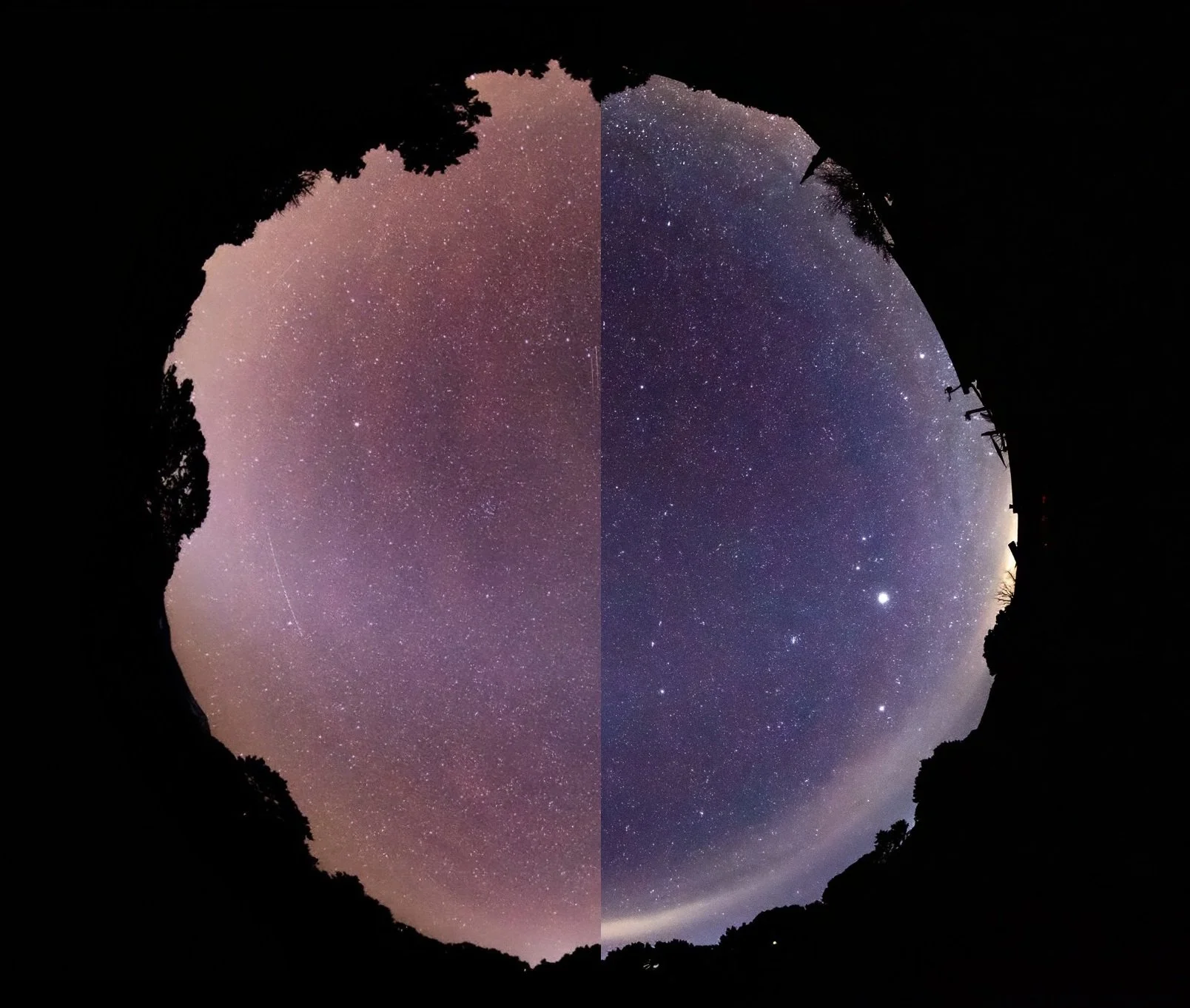
Left: December 30th - Red Airglow
Right: December 31st - Dark Night
December 31st, 2025: Dark Night
On the next night, December 31, 2025, there was still a couple of hours between Moonset and astronomical twilight. I noticed that the Town Hall Tess-W was reading 21.11 mpsas, already 0.15 darker than the previous nights. I got out the camera and set up a timelapse. I also recorded some handheld SQM-L readings. The average was around 21.65 mpsas with some single readings pushing into the 21.7s and 21.8s. The sky was dark in the playback screen and I could see very little color or structure. Processing revealed the darkness (see below gallery). The TESS-W maxed out around 21.23 mpsas (21.72 on the local SQM-LU-DL) that night.
On those nights where there is very little airglow, the SQM values can soar to over 21.75 on the Unihedron SQMs and up to 21.35 on the Tess-W at Town Hall. I love those nights for excellent contrast in the telescope. These dark nights are also useful for determining background sky brightness for light pollution research.
Other notes on processing and water vapor:
I process my All Sky images through the same filter as the neon green airlgow that I have seen in the past, and the red is truly red, and the green is truly green. I can see the different colors in the playback screen on the camera. These two colors relate to different bands of oxygen in the upper atmosphere.
Just a few nights ago, the airglow changed from red to green in one night (see here Dec 22 2025 Evolution of Airglow)
A couple nights ago, a winter storm came through and it was cool, wet, and mostly cloudy. I did not go out and observe or take images, however, the SQM meters were running, and the TESS-W at Town Hall soared to 21.23 (21.52 on the local SQM-LU-DL) in the gaps between clouds (it has an IR sensor to measure clouds). This is darker than it has been in awhile. The guess is that there was little airglow that night, and likely strong water vapor in the air column, so would point to airglow being the main contributor to diminished SQM values rather than invisible water vapor, but this needs to be explored more and verified.
Now the Moon is too full so I’ll be back with more airglow reports in a week or so.
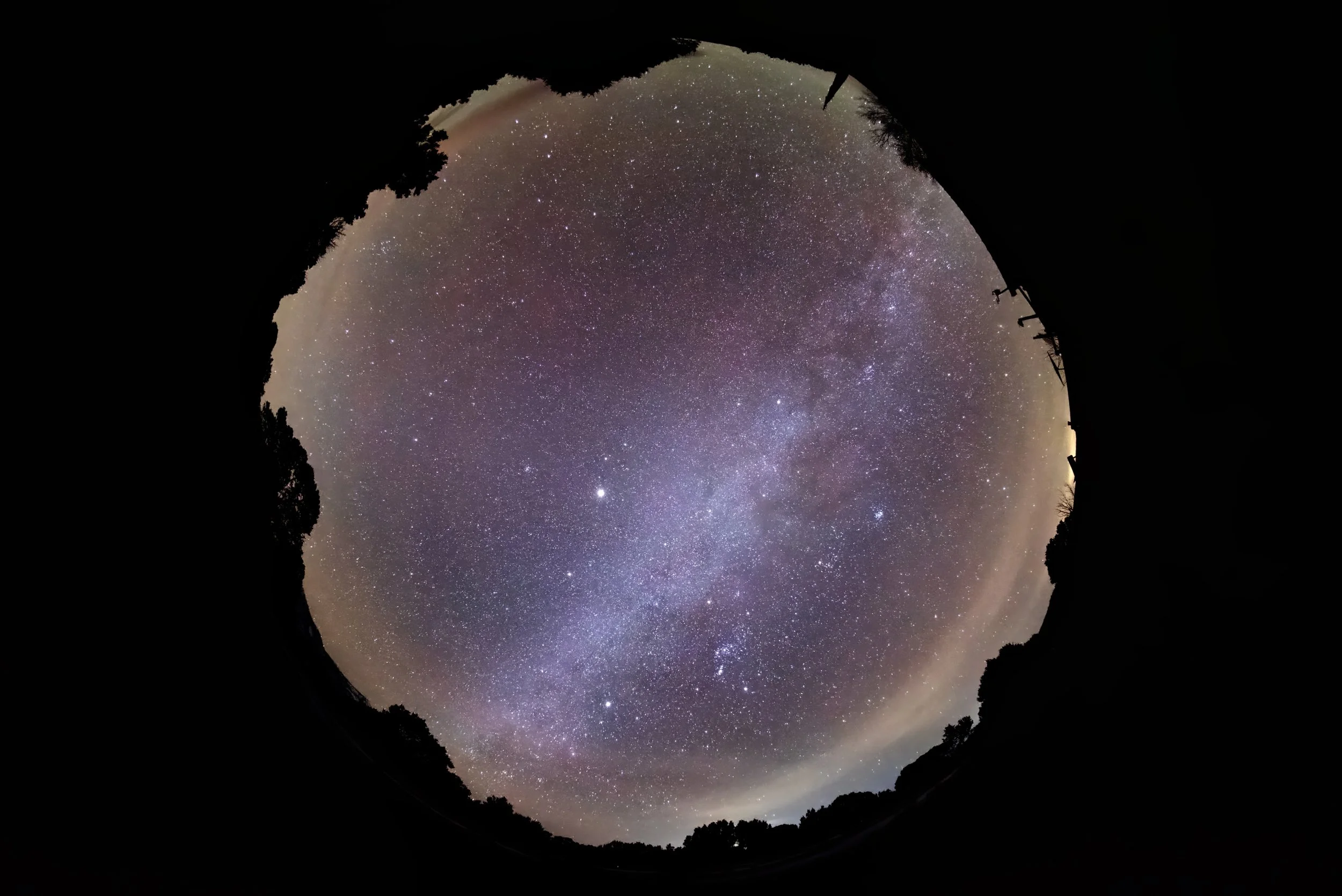
Dec 17th All Sky
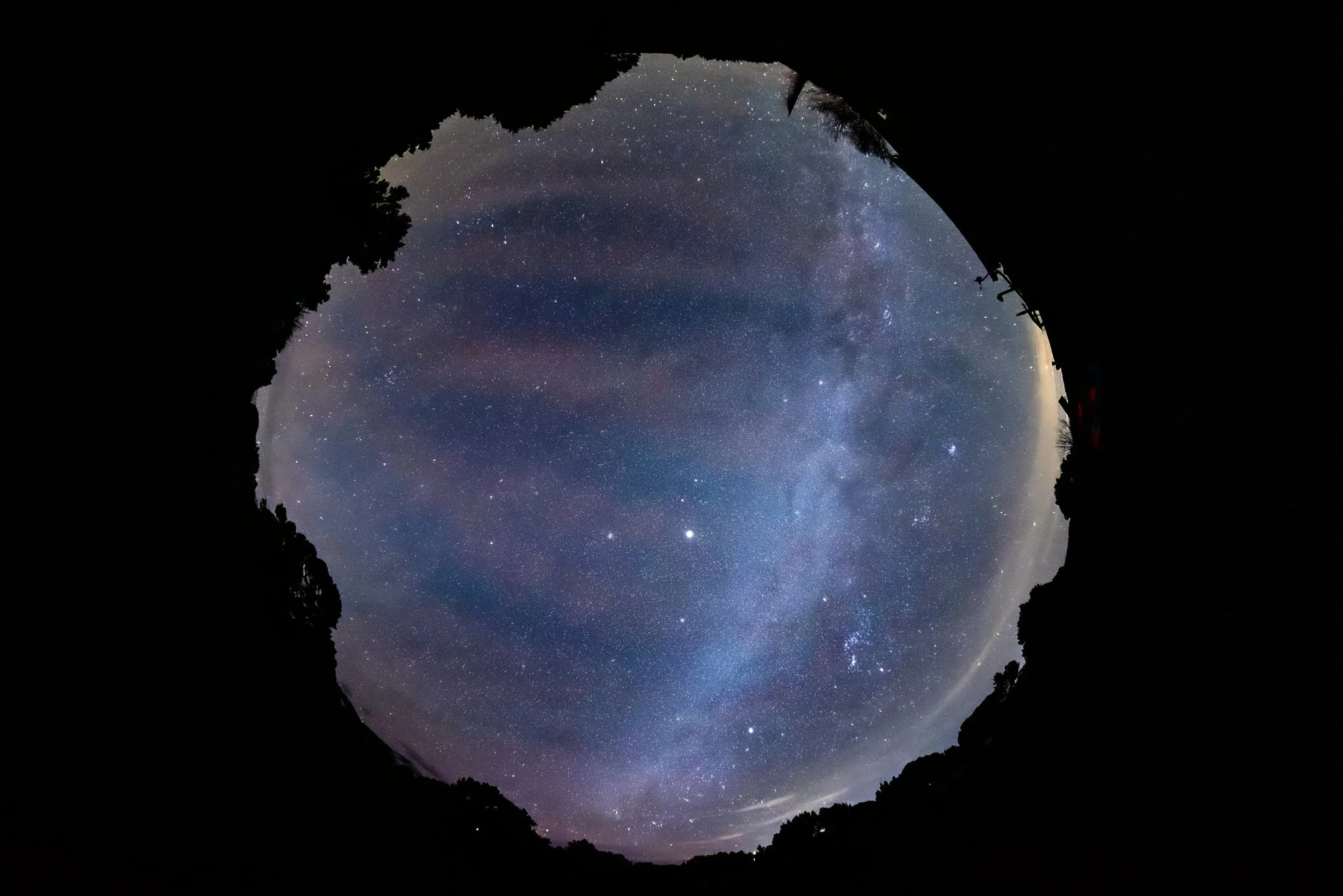
December 18th - Red airglow ripples likely spurred by a solar wind event
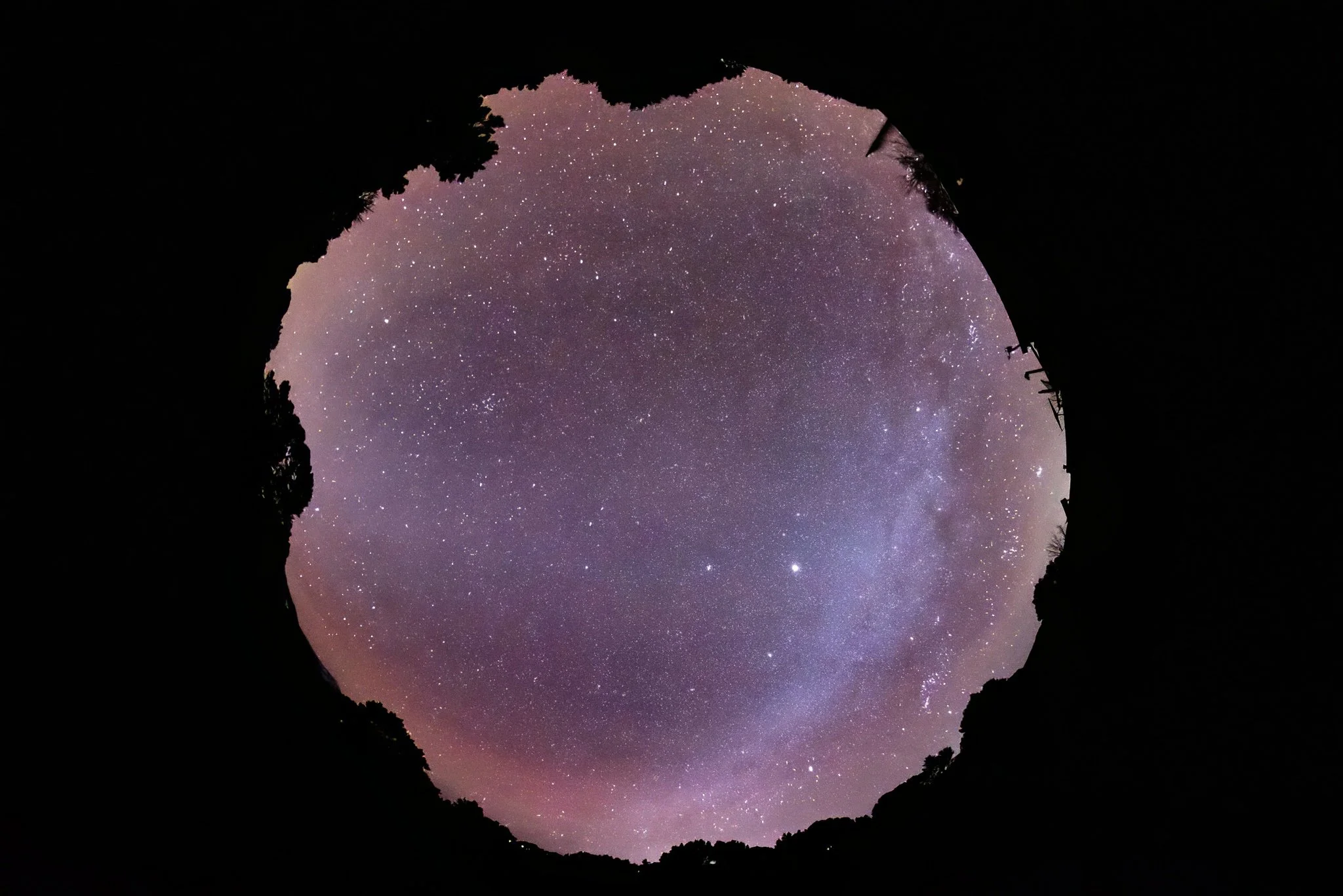
Dec 29th All Sky red airglow
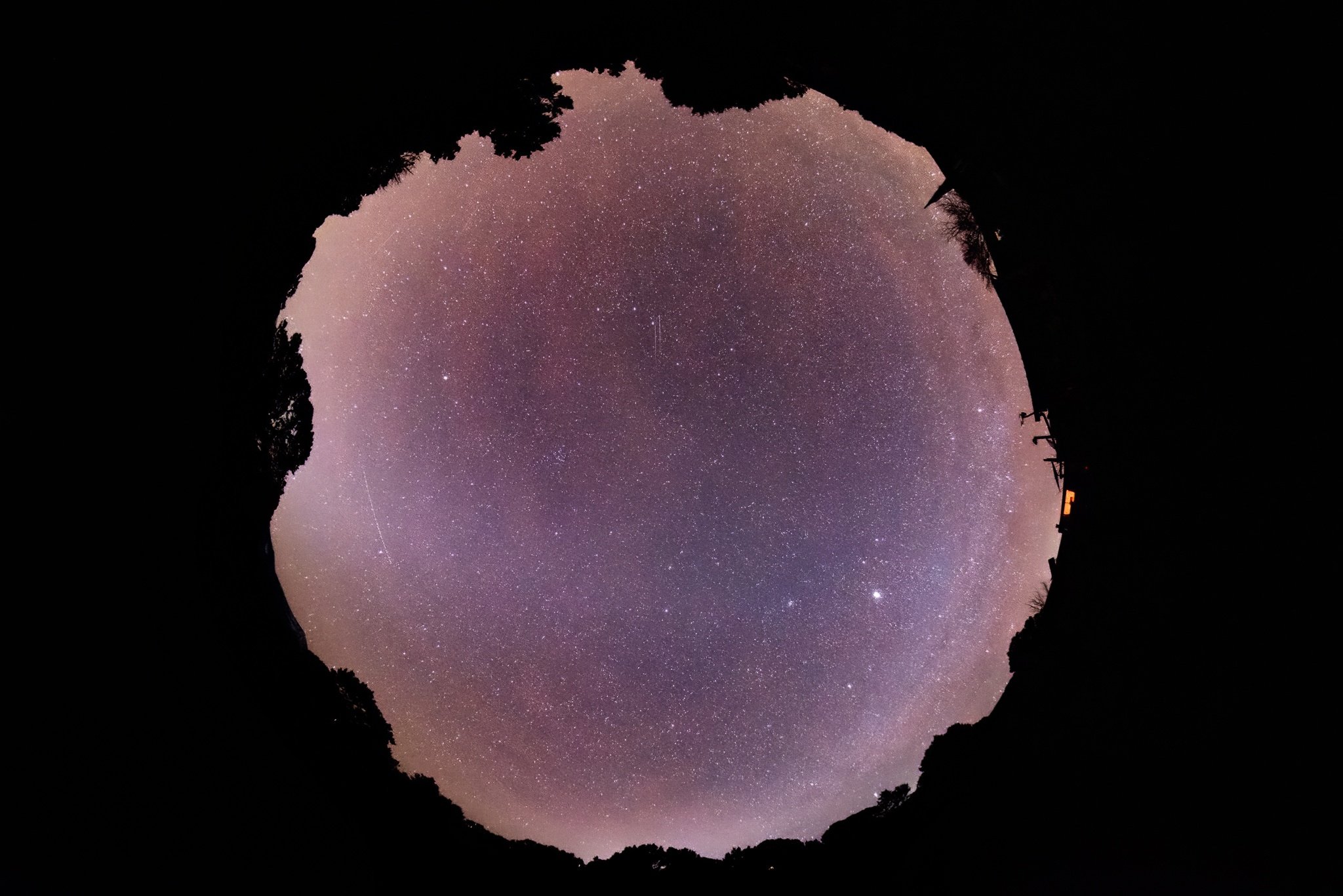
Red airglow example from December 30th
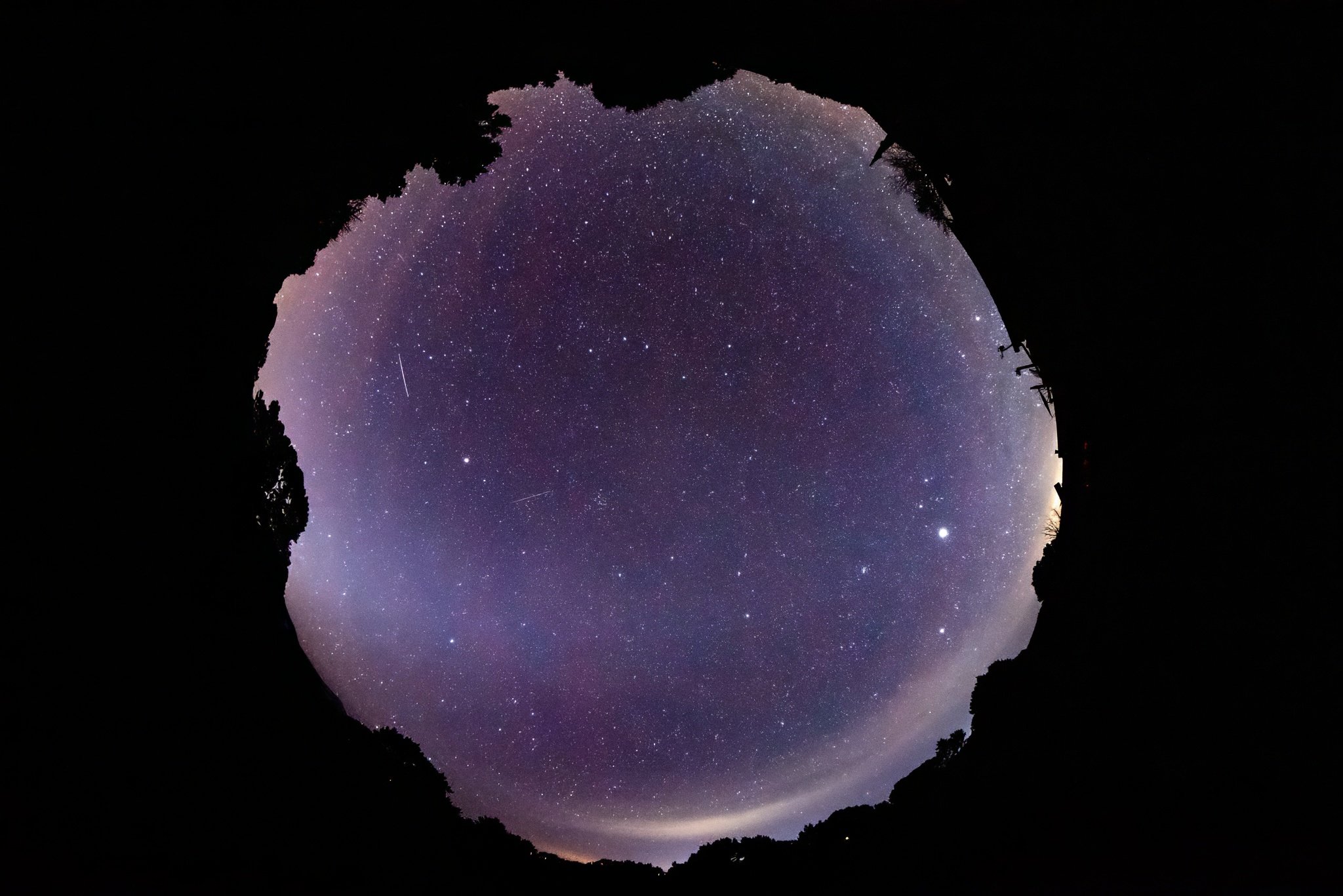
Dec. 31 Dark Night - 21.65 mpsas
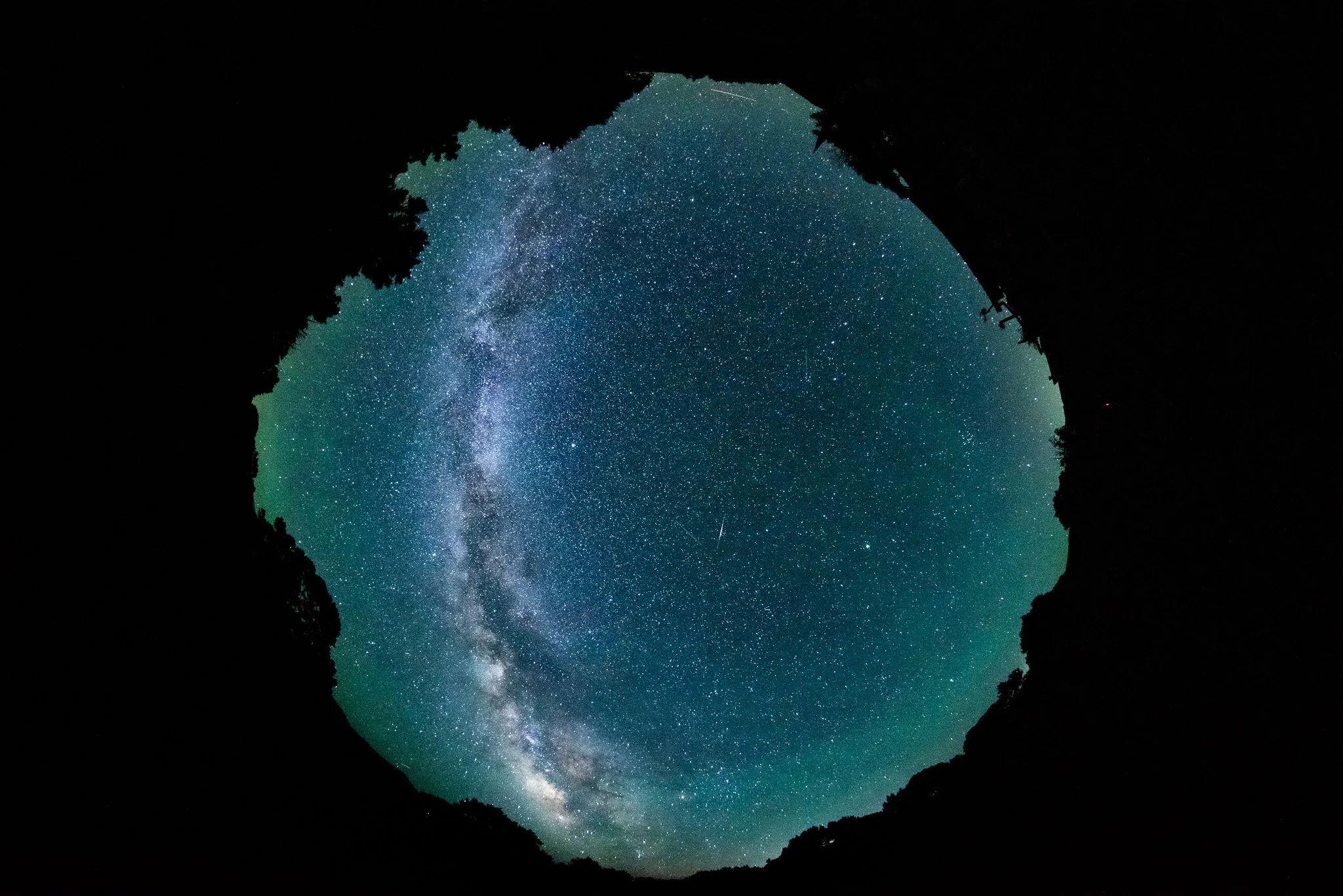
Dark Night example from June 19, 2025 12:30 AM

Dec 30th GeoColor showing a ridge of high pressure
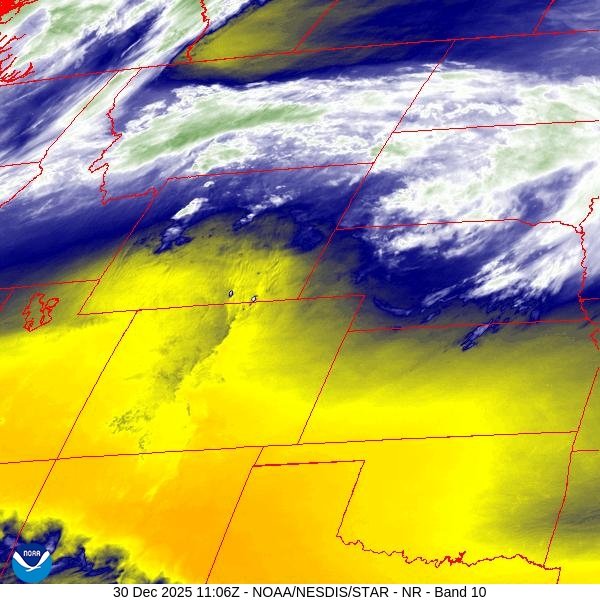
Lower level WV
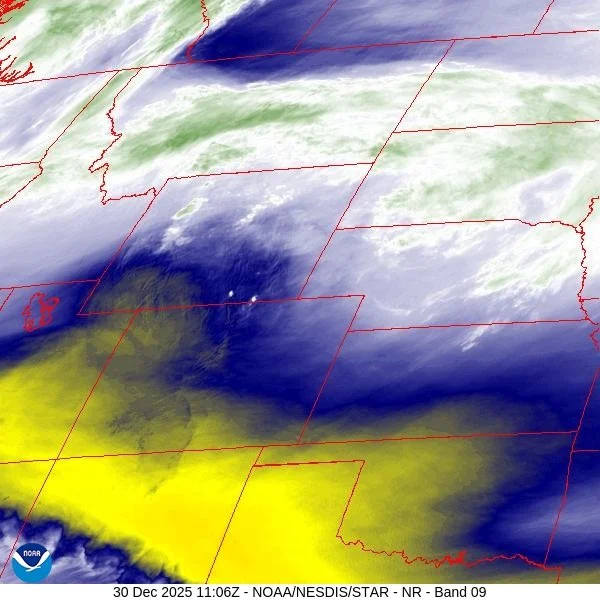
Mid level WV
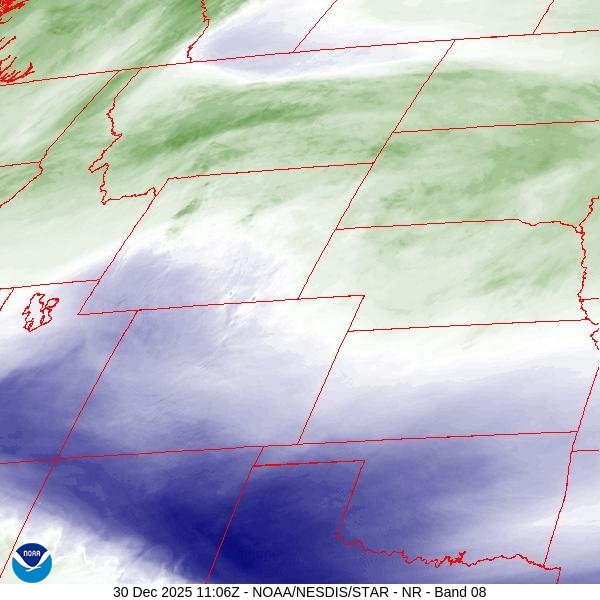
Upper level WV
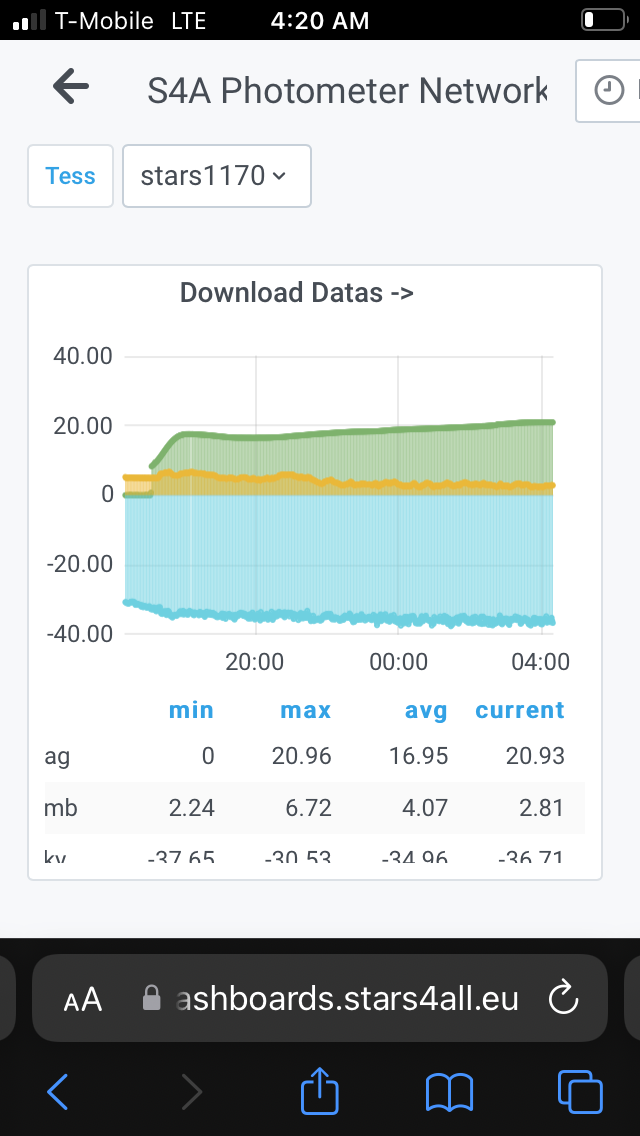
TESS-W SQM readings showing max of 20.95 :(