
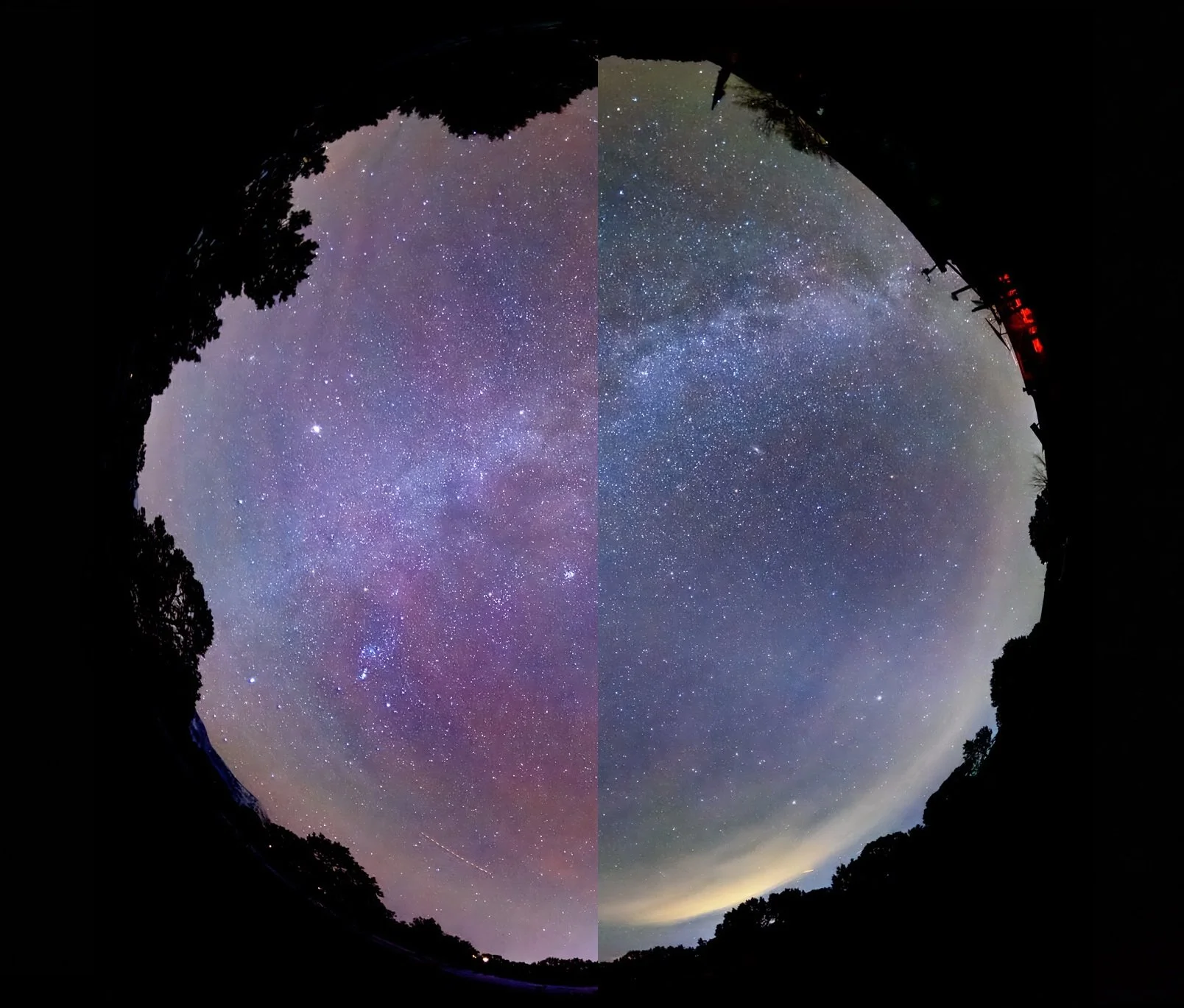
1/9/2026 Red Airglow (left) vs 1/6/2026 WV only (right)
January 6th and 9th 2026: WV Tests: Red All Sky Airglow vs No Airglow
I have been watching the sky recently asking the question of what causes nightly changes in sky quality on clear nights. Clear nights can have significant variations in sky quality (up to 0.5 mpsas) and this effects observing quality and raises questions on the impacts of naturally occurring airglow on light pollution measurements.
January 6th was interesting because there was a strong layer of water vapor (WV) in the mid and upper levels draped over west central colorado. I noted the Town Hall Tess-W SQM meter was logging in around 20.95. This was fairly normal considering that the Milky Way was directly overhead. There was also some zodiacal light stretching across the zentih. But the sky was relatively free of bright airglow.
Then last night, January 9th, it cleared up again, and I noticed the Tess-W was logging 20.65 mpsas, a whole 0.3 mpsas lower than on Jan. 6th. What could be the cause of this enhanced brightness? I took readings on the SQM-L and recorded an average of 21.05, which is quite low for this site (usually 21.2 - 21.4 average under the Milky Way). So I took some All Sky photos, and noticed some faint red banding in the playback screen. Could it be red airglow making the brightness difference?
From this data, there is evidence that the diminished sky quality is largely a factor of enhanced natural airglow, not water vapor or light pollution. This airglow decreased the level of darkness by approximately 0.3 mpsas, which is quite significant.
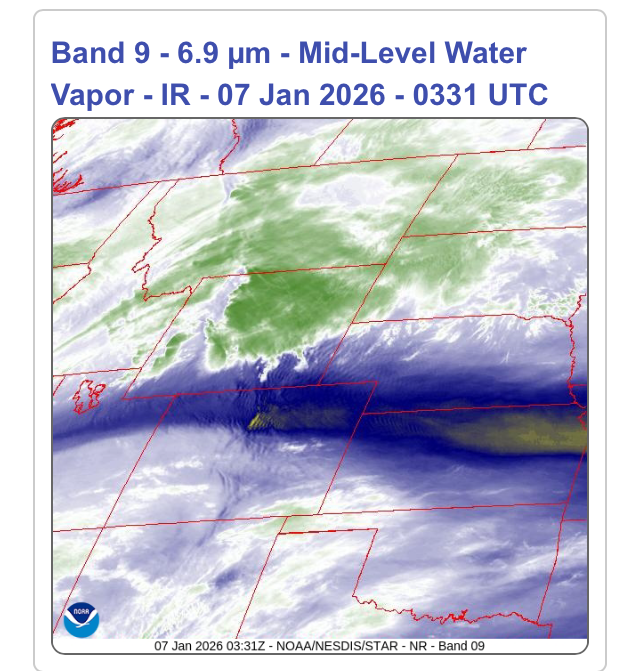
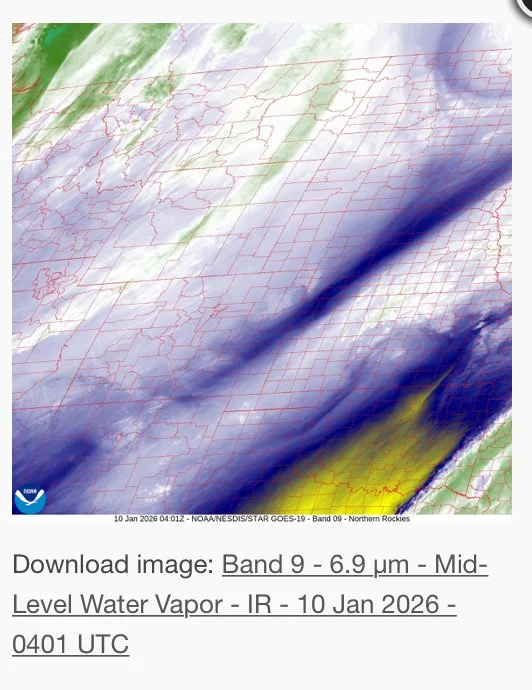
GOES Water Vapor imagery. Jan 6th on left, Jan 9th on right. Both nights show significant WV in the air column over west central Colorado. The difference is the added airglow on Jan 9th causing the 0.3 msas decrease in sky quality on the Tess-W.
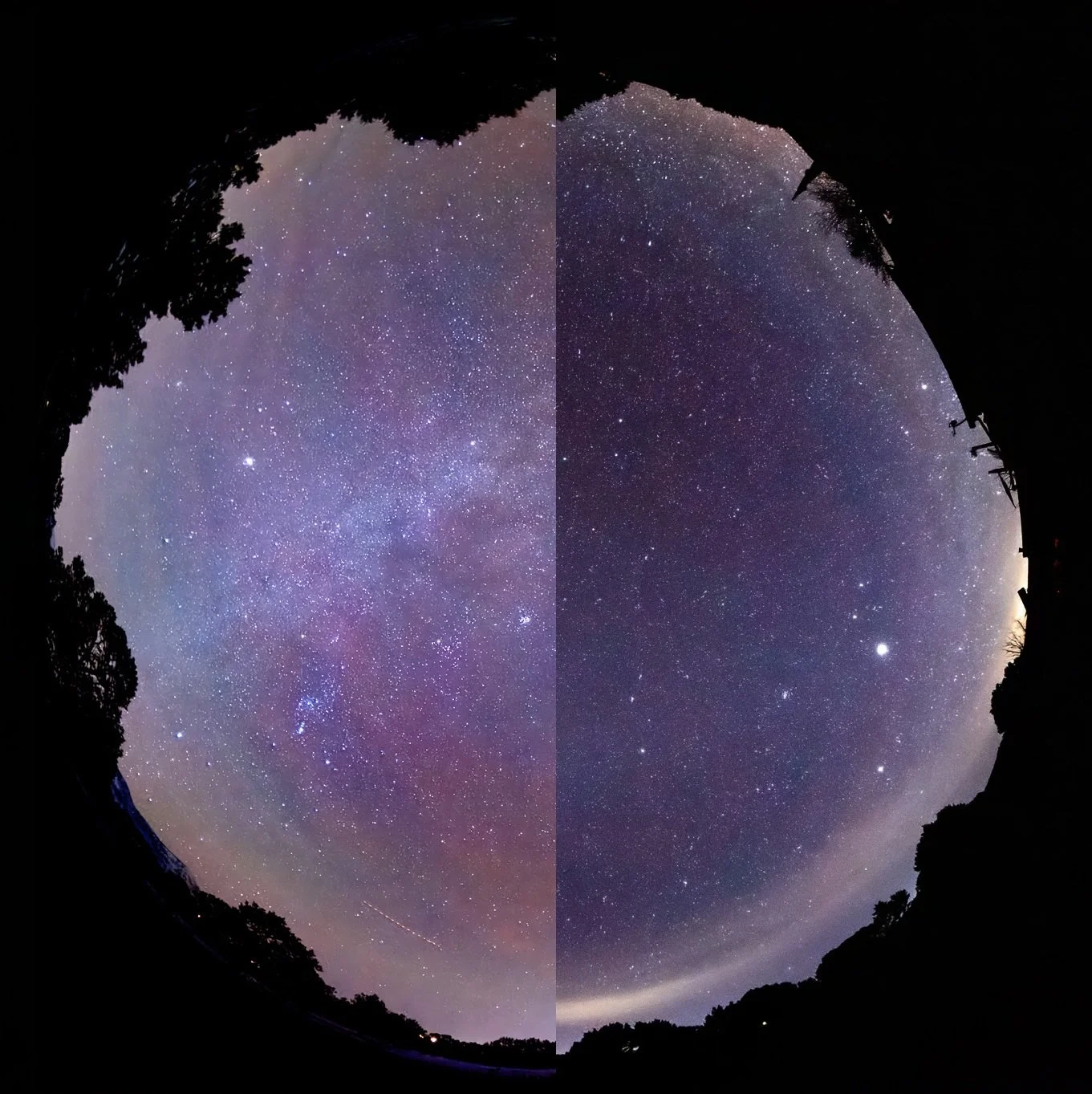
Left: Januray 9th- Red Airglow
Right: December 31st - Dark Night